


WATCH: NMMA Video Highlights the Promise of Strategic Maritime Fuels
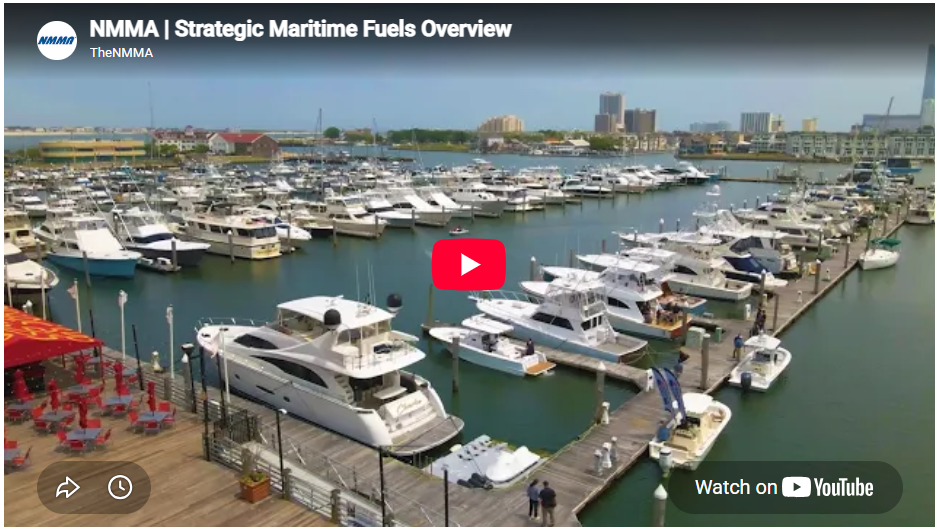
As the recreational boating industry continues advancing practical solutions to reduce emissions, Strategic Maritime Fuels (SMFs) are emerging as one of the most promising near-term opportunities for boaters, manufacturers, and the environment.
In a new video, Jeff Wasil, NMMA’s Vice President of Environmental Compliance and Marine Technology, explains how SMFs can help reduce emissions while maintaining the range, performance, reliability, and boating experience consumers expect.
SMFs are especially important because recreational boats operate differently than cars and trucks. Boats require high power over long periods of time, often in demanding marine environments and far from fueling or charging infrastructure. That is why the industry is advancing an all-of-the-above strategy that includes cleaner liquid fuels, electric propulsion, hybrid systems, hydrogen, advanced engines, improved vessel design, and other emerging marine technologies.
In June, the recreational boating industry came together in Atlantic City, New Jersey, to demonstrate several of these technologies in real-world marine conditions. Hosted by Viking Yacht Company at the Golden Nugget State Marina, the event featured leading marine industry professionals, technical experts, policymakers, and guests for a comprehensive review of marine innovation.
Following the presentations, attendees participated in on-water demonstrations featuring a variety of technological innovations and propulsion technologies.
The combustion-powered boats featured several types of SMFs, including renewable diesel, also known as Hydrotreated Vegetable Oil, and biobutanol, a partially renewable gasoline blend. These drop-in fuels – meaning the fuels can go directly into an existing engine – can provide an immediate reduction in emissions without compromising range, performance, or power. In many applications, they also hold promise for marine engines by supporting cleaner combustion and helping to protect long-term engine performance.
By showcasing practical, near-term fuels alongside emerging technologies, NMMA and its members demonstrated how the recreational boating industry is leading through innovation, collaboration, and a strong commitment to responsible environmental progress.
For recreational boating, the future will not be built around a single solution. It will require multiple technologies that reflect how boats are designed, powered, stored, and used. SMFs are an important part of that future because they can help reduce emissions across the current fleet while supporting continued access to the water.
Watch the video below to hear why Strategic Maritime Fuels matter for the future of recreational boating.